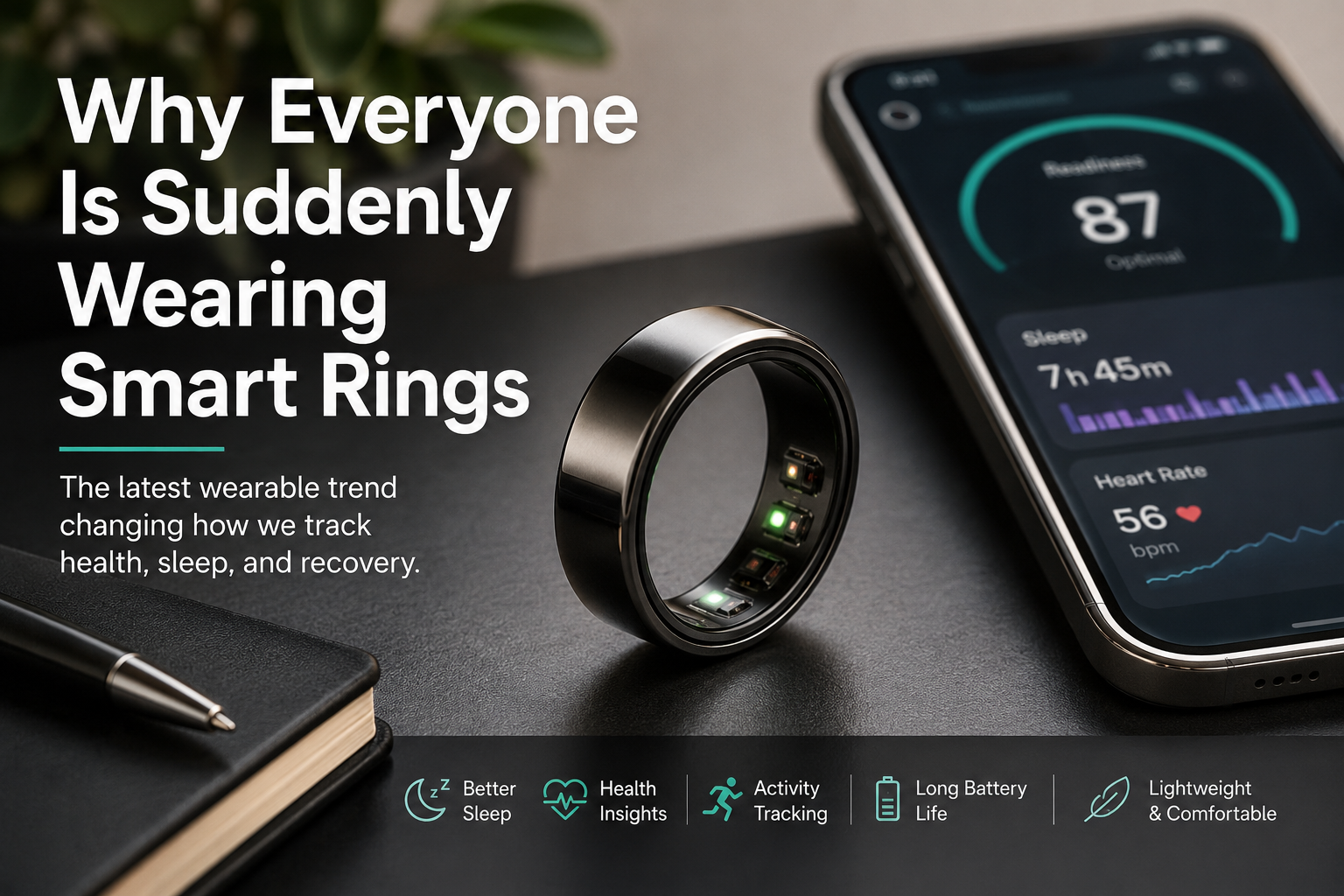

Smart rings are having a moment.
Not smartwatches. Not fitness bands. Rings.
The new wearable trend is smaller, quieter, and honestly a little more futuristic. Instead of wearing a screen on your wrist all day, people are starting to track sleep, recovery, stress, heart rate, activity, and wellness data from a ring that looks almost like regular jewelry.
That is why smart rings are becoming one of the most interesting product trends right now.
They sit at the intersection of health tech, productivity culture, AI-powered wellness, and minimalist everyday carry. In other words: exactly the kind of product the internet loves to obsess over.
What Is a Smart Ring?
A smart ring is a wearable device that fits on your finger and tracks health, sleep, activity, and wellness data.
Depending on the model, a smart ring may track:
- Sleep
- Heart rate
- Heart rate variability
- Skin temperature
- Blood oxygen
- Activity
- Stress
- Recovery
- Readiness
- Menstrual cycle trends
The big difference is that smart rings do this without a screen.
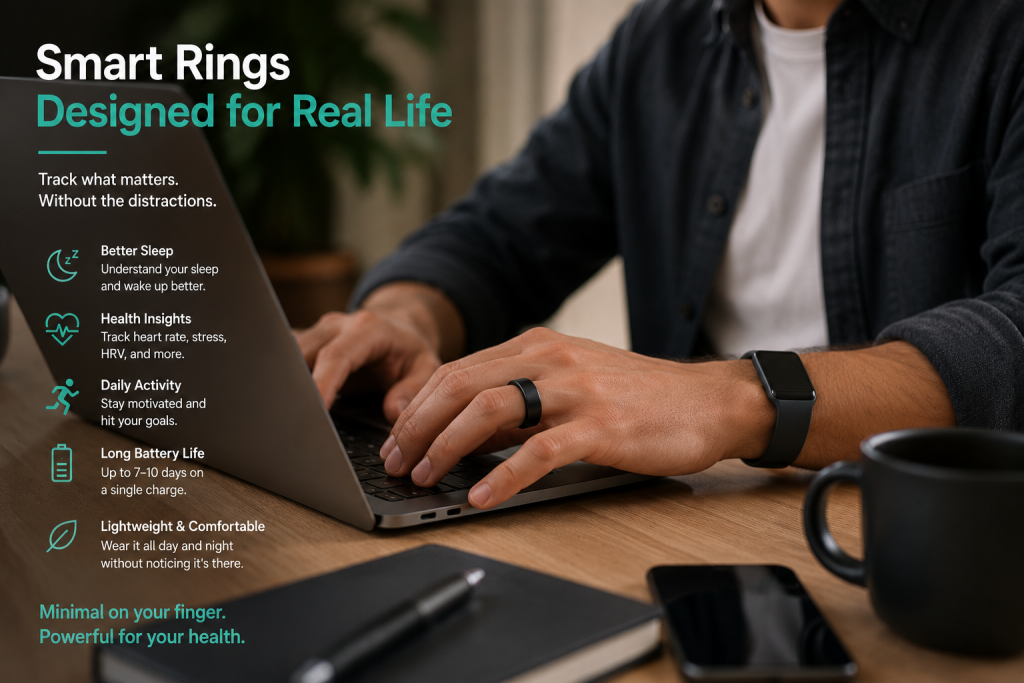
That makes them less distracting than a smartwatch and easier to wear overnight. That overnight comfort matters because sleep tracking is one of the biggest reasons people buy smart rings in the first place.
Disclosure: As an Amazon Associate, EmploymentOffice.org earns from qualifying purchases. Product availability, pricing, and features may change over time.
Why Smart Rings Are Trending Right Now
Smart rings are trending because they solve a very modern problem:
People want more health data, but they do not always want another screen.
A smartwatch is useful, but it can also feel like one more device constantly asking for attention. A ring is different. It is smaller, lighter, and more passive.
That makes smart rings attractive to people who want:
- Better sleep tracking
- A minimalist wearable
- Fitness and wellness insights
- Recovery data
- Less screen time
- A more subtle tech accessory
The category is also getting stronger because major brands are now involved.
Oura has become one of the best-known names in smart rings, with a strong focus on sleep, fitness, stress, and wellness insights. Samsung’s Galaxy Ring has also pushed the category further into the mainstream by bringing Galaxy AI and Samsung Health into the smart ring conversation. Samsung describes the Galaxy Ring as a premium smart ring with health and fitness tracking powered by Galaxy AI.
The Big Products Leading the Smart Ring Trend
Below are some of the smart rings currently shaping the category.
1. Oura Ring 4
The Oura Ring 4 is probably the name most people think of first when they hear “smart ring.”
Oura focuses heavily on sleep, recovery, stress, activity, and readiness insights. The company positions the ring as a wellness tool that provides round-the-clock health insights.
Why it is trending:
- Strong brand recognition
- Popular with wellness-focused users
- Strong sleep and recovery positioning
- Clean, premium design
- Broad awareness in the smart ring category
The big thing to know: Oura’s ecosystem includes a membership layer, so buyers should factor the ongoing subscription into the total cost before choosing it.
2. Samsung Galaxy Ring
Samsung entering the smart ring market changed the conversation.
The Galaxy Ring brings smart rings into Samsung’s larger ecosystem, especially for people already using Galaxy phones, Samsung Health, or Samsung wearables.
Why it is trending:
- Samsung brand power
- Galaxy AI positioning
- Strong Android ecosystem fit
- Premium design
- No separate subscription angle
For Samsung users, this may be one of the easiest smart rings to understand because it connects naturally to devices and apps they may already use.
3. Ultrahuman Ring Air
Ultrahuman Ring Air is another major smart ring option, especially for buyers who want a lightweight ring with health, sleep, movement, and recovery tracking.
Ultrahuman positions the Ring Air as a compact smart ring focused on sleep, movement, and recovery, with battery life listed in the 4-to-6-day range.
Why it is trending:
- Lightweight design
- Recovery and wellness tracking
- Strong no-subscription appeal
- Good alternative to Oura and Samsung
- Popular among people comparing smart ring ecosystems
This is the kind of product that becomes interesting when shoppers start asking:
“Do I really want another monthly subscription?”
4. RingConn Gen 2 Air
RingConn Gen 2 Air is interesting because it pushes the smart ring category toward affordability and longer battery life.
RingConn positions the Gen 2 Air as a lightweight AI health and sleep tracker with up to 10 days of battery life and no subscription fee.
Why it is trending:
- Lower price point
- Long battery life
- No subscription fee
- Health and sleep tracking
- Strong value positioning
This is the smart ring to watch for people who want the category benefits without jumping straight into the most expensive option.
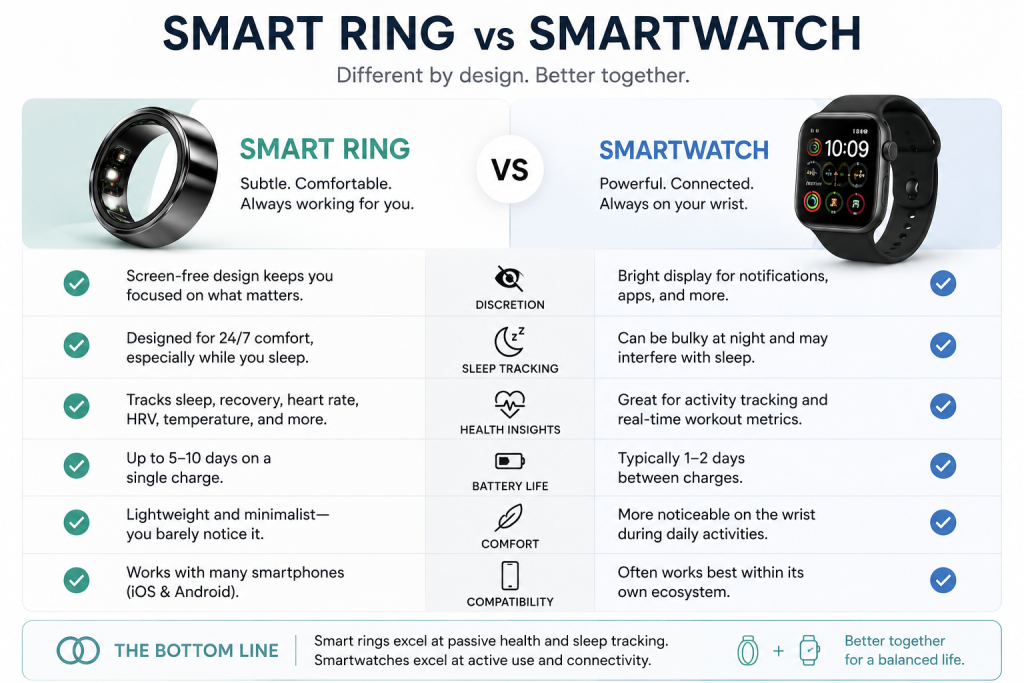
Smart Ring vs Smartwatch: Why People Are Switching
The smart ring trend is not really about replacing every smartwatch.
It is about a different kind of wearable.
A smartwatch is active. It has a screen. It sends notifications. It can run apps. It can feel like a mini phone on your wrist.
A smart ring is passive. It quietly tracks data in the background.
That makes it especially appealing for:
- Sleep tracking
- Recovery monitoring
- People who dislike bulky watches
- People who want less screen time
- People who already wear a traditional watch
- People who want health insights without another display
That last point is important.
A lot of people still like wearing normal watches. A smart ring lets them keep their watch while still getting wearable health data.
The Subscription Question Matters
One of the biggest buying questions in this category is not just:
“Which smart ring is best?”
It is:
“Which smart ring makes the most sense long-term?”
Oura is one of the most recognizable brands, but its membership model matters. Samsung, Ultrahuman, and RingConn are interesting because they compete around lower-friction ownership and, in some cases, no separate subscription positioning.
For buyers, the real comparison is not just hardware.
It is:
- Price
- Subscription cost
- Battery life
- App experience
- Phone compatibility
- Comfort
- Sleep tracking
- Health insights
- Ecosystem fit
Who Should Consider a Smart Ring?
A smart ring may make sense if you care about:
- Sleep tracking
- Recovery data
- Health trends
- Minimalist wearables
- Fitness insights
- Stress monitoring
- Screen-free tracking
It may not be ideal if you want:
- A display
- Real-time workout stats on your wrist
- Built-in music controls
- Text alerts
- Full smartwatch features
That is why smart rings are not really “tiny smartwatches.”
They are more like quiet health trackers.
The Bottom Line
Smart rings are trending because they feel like the next phase of wearable tech.
They are smaller than smartwatches, easier to sleep in, less distracting, and increasingly powerful. Oura helped define the category. Samsung made it more mainstream. Ultrahuman and RingConn are pushing the market with comfort, battery life, and no-subscription alternatives.
The smart ring trend is not just about jewelry.
It is about people wanting better health data without more screen noise.
And that is exactly why everyone is suddenly paying attention.
Disclosure: As an Amazon Associate, EmploymentOffice.org earns from qualifying purchases. Product availability, pricing, and features may change over time.